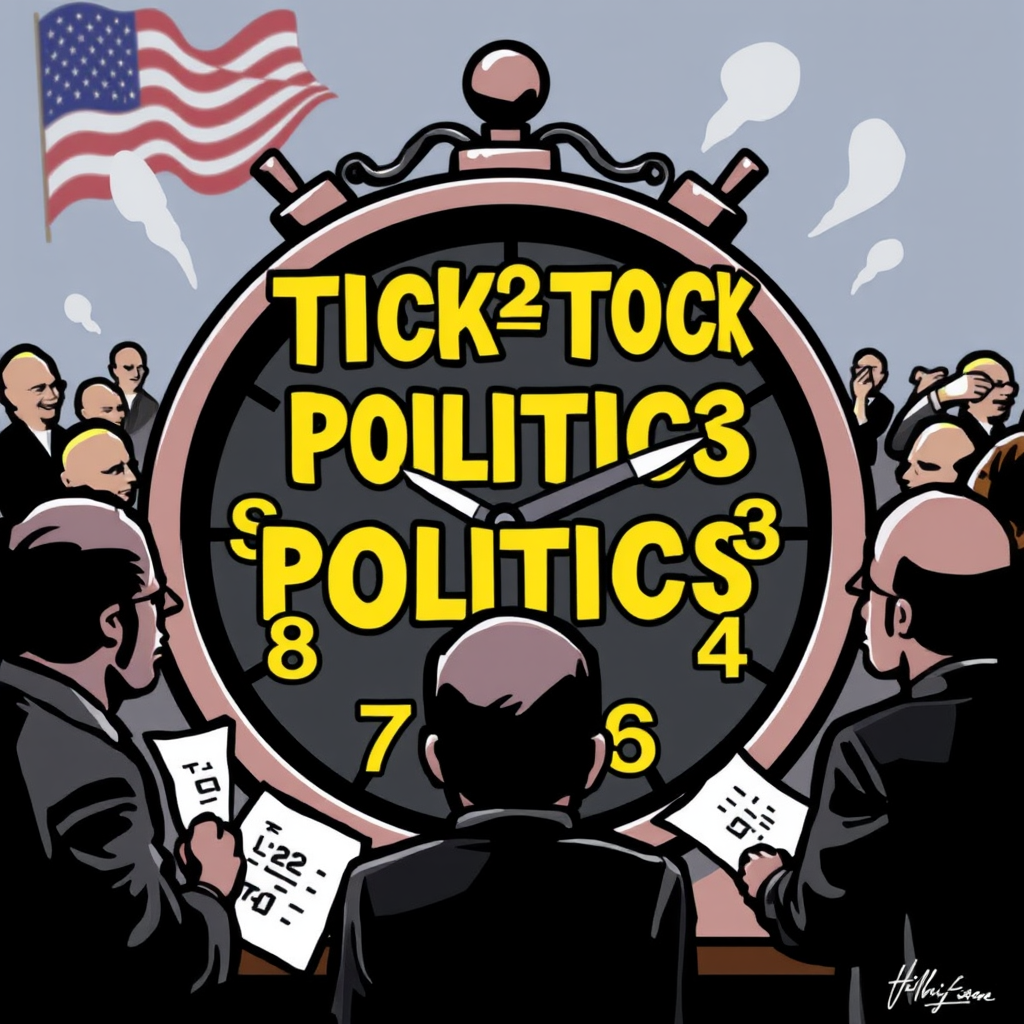
Once upon a time, in a land filled with shiny red-white-and-blue bunting and people who talk way too much behind podiums, there existed a giant, shimmering jukebox called The Democracy Machine. Everyone told the villagers that the machine played music for everyone equally, but if you looked closely at the coin slot, you would see that the tunes changed depending on how many gold doubloons you dropped into the machinery. To understand how this musical marvel really works, we must follow three very different characters on their quest to influence the playlist.
First, let’s meet Penny. Penny is a lovely person who works hard, remembers her neighbors' birthdays, and thinks that participating in a democracy is as vital as eating her vegetables. One sunny afternoon, Penny decides she wants to help her favorite candidate, a fellow named Senator Smooth-Talker. She reaches into her piggy bank, pulls out a crisp twenty-dollar bill, and sends it off with a hopeful smile. She imagines the Senator holding her twenty dollars, looking at it with a tear in his eye, and saying, "This is the twenty dollars that will change the world!"
In reality, Penny’s donation enters a giant digital vacuum cleaner. A few days later, Penny receives her grand reward: a mass-produced email that begins with "Dear Valued Supporter" and ends with a request for another fifteen dollars. She also gets a bumper sticker that loses its stickiness the moment it touches rain. To the Senator, Penny is a "data point," a tiny grain of sand on a very large beach. She has done her civic duty, but the only "access" she gets is the privilege of being put on a mailing list that will haunt her inbox until the end of time. Penny is the heart of the system, but in the giant jukebox of politics, her twenty dollars only buys her about half a second of a kazoo solo.
Next, we encounter Mid-Tier Mike. Mike owns a successful chain of artisanal spatula shops and has a bit more jingle in his pockets. Mike wants to make sure the Senator understands the very important issues facing the spatula industry. He writes a check for two thousand dollars, which is enough to make the campaign staff perk up their ears like golden retrievers hearing a treat bag crinkle. Mike isn't just a "data point" anymore; he is now a "Friend of the Campaign."
Mike’s reward is a ticket to a "Exclusive VIP Luncheon" held in a hotel ballroom that smells faintly of industrial carpet cleaner. He gets to sit at a table with eight other Mikes and eat a piece of chicken so dry it could be used as a structural component in a bridge. At the end of the meal, Senator Smooth-Talker walks by, shakes Mike’s hand for exactly 2.4 seconds, and says, "Great to see you, keep up the good work!" Mike feels special, but as soon as the Senator moves to the next table, he forgets Mike’s name and probably thinks he sells car insurance instead of spatulas. Mike’s two thousand dollars bought him a handshake and a very dry lunch, which is a step up from a bumper sticker, but he still isn't the one picking the songs.
Finally, we enter the world of Baron Von Big-Bucks. The Baron doesn't deal in piggy banks or dry chicken. The Baron deals in "Committees for a Brighter Tomorrow" and "Super-Duper Action Groups." He decides to drop a cool two million dollars into the machine. When the Baron’s check hits the campaign headquarters, the music stops, the lights flash, and the Senator personally teleports to the Baron’s living room. Okay, maybe not literally, but it’s pretty close.
For the Baron, the "Democracy Machine" isn't a jukebox; it's a personal karaoke machine where he gets to hold the microphone. He doesn't get a bumper sticker or a dry chicken breast. He gets the Senator’s private cell phone number—the one he answers even when he’s in the middle of a bubble bath. When the Baron has a "thought" about a new law, the Senator listens with the intensity of a diamond cutter. The Baron isn't just influencing the playlist; he’s writing the lyrics, choosing the tempo, and deciding who gets to dance. To the Baron, the system is working perfectly, mainly because he’s the one who bought the speakers.
The whimsical tragedy of our three friends is that they all believe they are playing the same game. Penny thinks her vote and her twenty dollars are the fuel of the nation. Mike thinks his business savvy and his two thousand dollars give him a seat at the table. But the Baron knows the truth: in a world where speech is measured in dollars, those with the loudest wallets get the most echoes. It’s a bit like a costume party where everyone is told to dress up, but only the person in the gold-plated tuxedo gets to decide what games everyone plays.
As the sun sets on the Town of Politico-Land, the Senator stands on his stage, thanking "the people" for their support. Penny watches on TV, feeling proud of her sticker. Mike looks at his photo from the luncheon, feeling like an insider. And the Baron sits on his balcony, texting the Senator a list of things he’d like to see happen by Tuesday. The music plays on, a catchy tune that sounds a lot like democracy, but if you listen closely to the bass line, you can hear the distinct "clink-clink-clink" of the big spenders making sure the song never changes.
In the end, the parable of the three donors reminds us that while every voice might have a right to be heard, some voices come with a high-powered megaphone and a professional sound crew. It’s a funny old world, isn't it? Just remember, next time you see a politician smiling on a flyer, look closely at the background. You might just see Penny’s sticker, Mike’s chicken bone, and the Baron’s velvet ropes, all dancing together in the great, expensive circus of the ballot box.